a/eAutoEscapeDEVELOPER GUIDES
HomeGuidesAboutContact
Information
Editorial PolicyPrivacy PolicyTerms of UseCookie PolicyDisclaimer
Menu
HomeGuidesAboutContact

Website information

Editorial PolicyPrivacy PolicyTerms of UseCookie PolicyDisclaimer
Skip to content
  • Removing Undefined Values from JSON in JavaScript
    Guides

    How to get rid of undefined values from JSON objects in JavaScript

    ByAutoEscape September 29, 2026

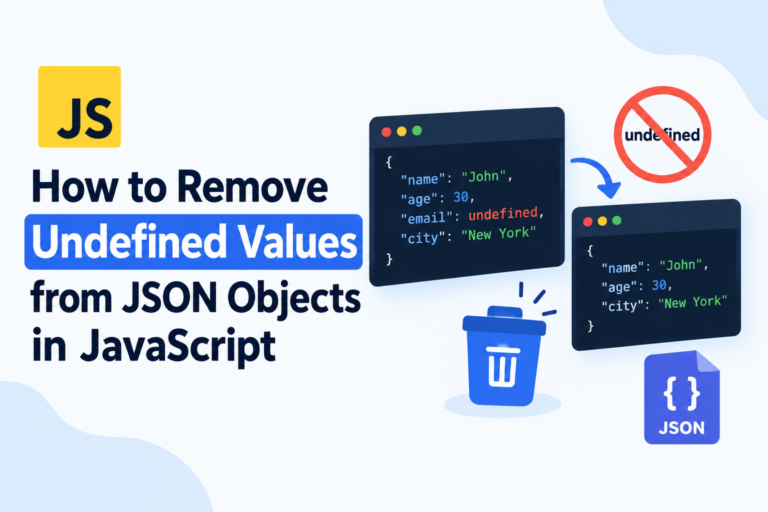
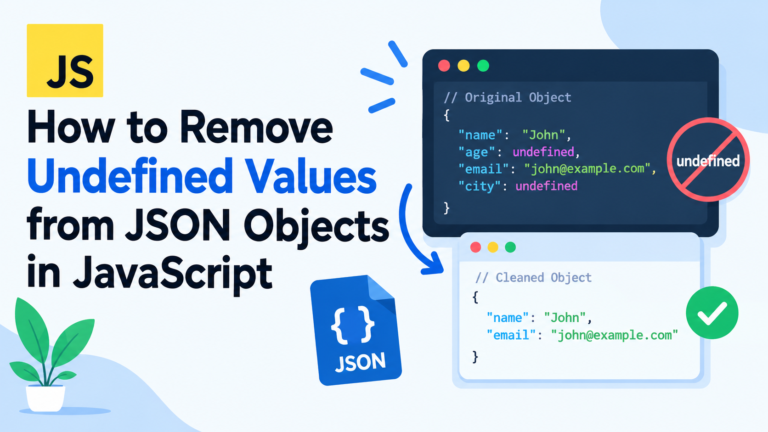
    In working with objects in JavaScript you will sometimes come across some object properties that have values undefined. These properties may produce surprising consequences when you transform an object to JSON, deliver data to an API or store data in a file. Knowing how to get rid of undefined values in JSON objects in JavaScript…

    Read More How to get rid of undefined values from JSON objects in JavaScriptContinue

  • Removing Undefined Values from JSON
    Guides

    All possible ways to remove undefined values from json objects using javascript.

    ByAutoEscape September 25, 2026

    A reason you might want to use JavaScript objects sometime is that the properties may be undefined in some cases. When processing for APIs, storing data or converting JS objects to JSON strings, these values can cause confusion. Removing any undefined values from JSON objects in JavaScript can help ensure your data is always clean,…

    Read More All possible ways to remove undefined values from json objects using javascript.Continue

  • How to Take Query Parameters and Encode Them with URLSearchParams
    Guides

    How to Take Query Parameters and Encode Them with URLSearchParams

    ByAutoEscape September 20, 2026

    Query parameters are useful in JavaScript when handling URLs to pass data from one page to another, filtering results in a search, and passing data on to an API. But if you build the urls yourself, then there are some special characters like spaces, ampersand, plus that can give you unexpected results. However, there is…

    Read More How to Take Query Parameters and Encode Them with URLSearchParamsContinue

  • Escape Pipes in Markdown Tables
    Guides

    Escape Pipes in Markdown Tables

    ByAutoEscape September 18, 2026

    Markdown tables are a convenient way of presenting data in tabular format. They’re often employed in documentation, blog posts, tutorials, README files, or technical guides. But errors will arise if you have to show a pipe character (|) in a cell of the table. A pipe character (“|”) is used in Markdown tables for a…

    Read More Escape Pipes in Markdown TablesContinue

  • URL Encoding Explained Spaces, Plus Signs, and Percent Encoding
    Guides

    URL Encoding Explained: Spaces, Plus Signs, and Percent Encoding

    ByAutoEscape September 16, 2026

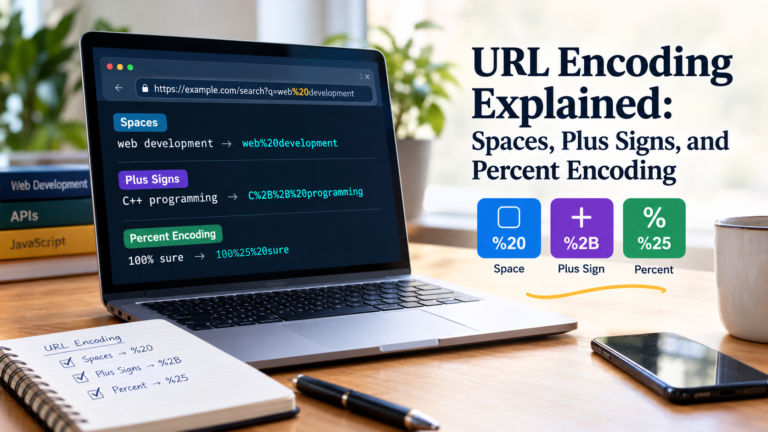
    The URL encoding is an essential part of web development, particularly in regard to working with URL, query parameters, search forms and user input. You have already found URL encoding if you’ve ever seen %20, %2B, or %3D in the middle of a URL. These codes can be mystifying at first glance but they come…

    Read More URL Encoding Explained: Spaces, Plus Signs, and Percent EncodingContinue

  • Rendering Unicode and Emoji in JSON
    Guides

    How to render Unicode, emoji and Surrogate Pairs in JSON?

    ByAutoEscape September 13, 2026

    JSON is very popular as a way to communicate data that is exchanged between applications, APIs, websites and servers. While simple text inputs and outputs typically work well, it’s easy for the mix of Unicode characters and punctuation, emojis, special symbols, or characters from other alphabets to cause confusion. For instance, a JSON string may…

    Read More How to render Unicode, emoji and Surrogate Pairs in JSON?Continue

Page navigation

Previous PagePrevious 1 2 3 4 5 6 Next PageNext

Small details.
Clean results.

Practical developer guides on JSON, HTML, URLs, regex and Markdown. Clear explanations for the details that matter.

Explore Guides ↗

Explore

  • Home
  • Guides
  • About
  • Editorial Policy

Policies

  • Privacy Policy
  • Terms of Use
  • Cookie Policy
  • Disclaimer

Get in touch

  • Contact
  • support@autoescape.online

Operated by Noah
United Kingdom

© 2026 AutoEscape. Developer guides.

Privacy settings
Scroll to top